
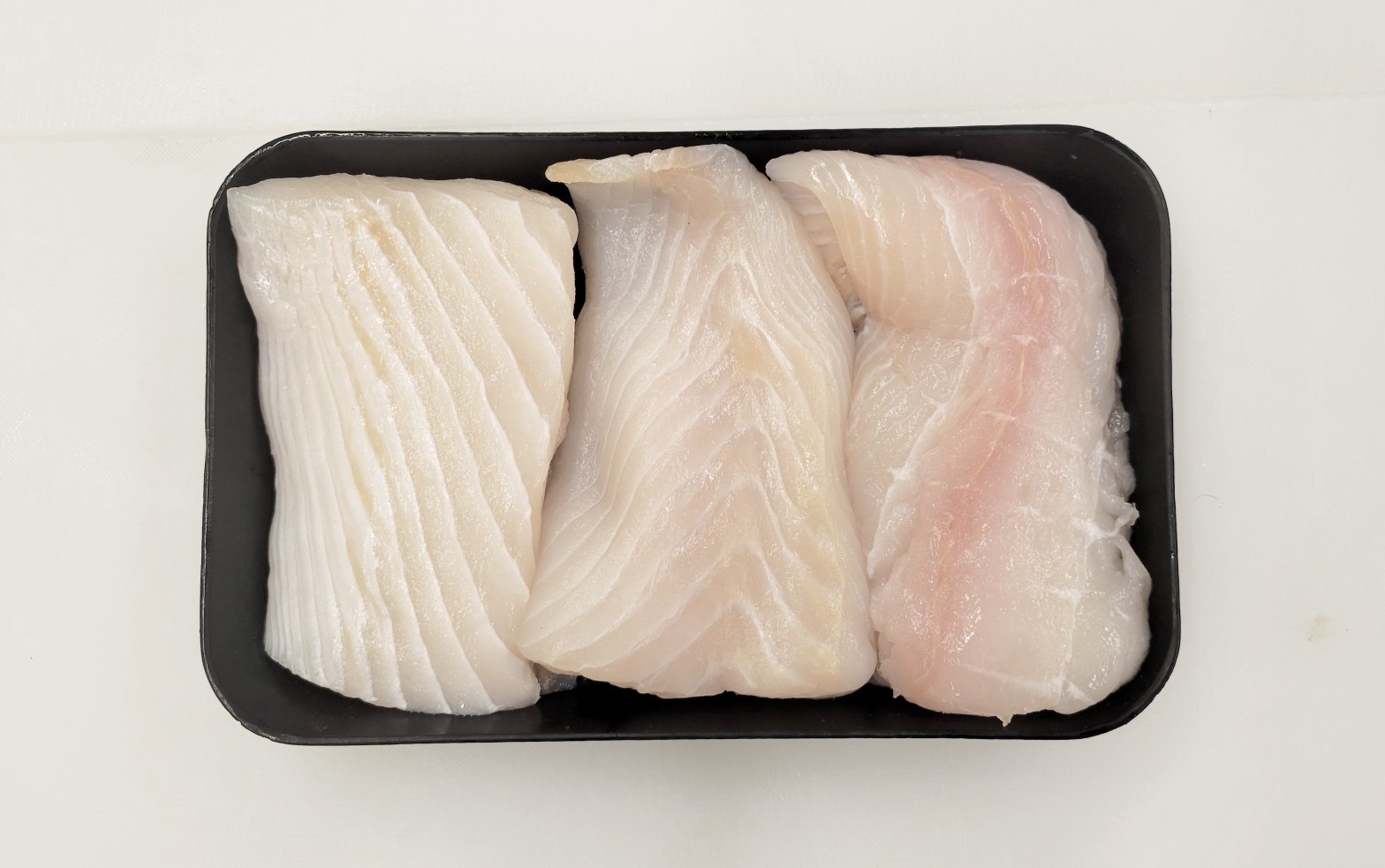
Among fish connoisseurs, halibut is known to be the cream of the crop.
How could it not?
It’s flesh is pure white when raw, a trait usually given to fillets post-cooking. While beautiful, this is what makes halibut deceitful, and therefore intimidating to cook, since the snow-white flesh makes it difficult to tell when the fillet has been cooked all the way through. On top of that, halibut has the tendency to dry out quickly while cooking, despite the fillet being as thick as salmon even though the fish is flat shaped like flounder. It goes to show just how large these things can grow.
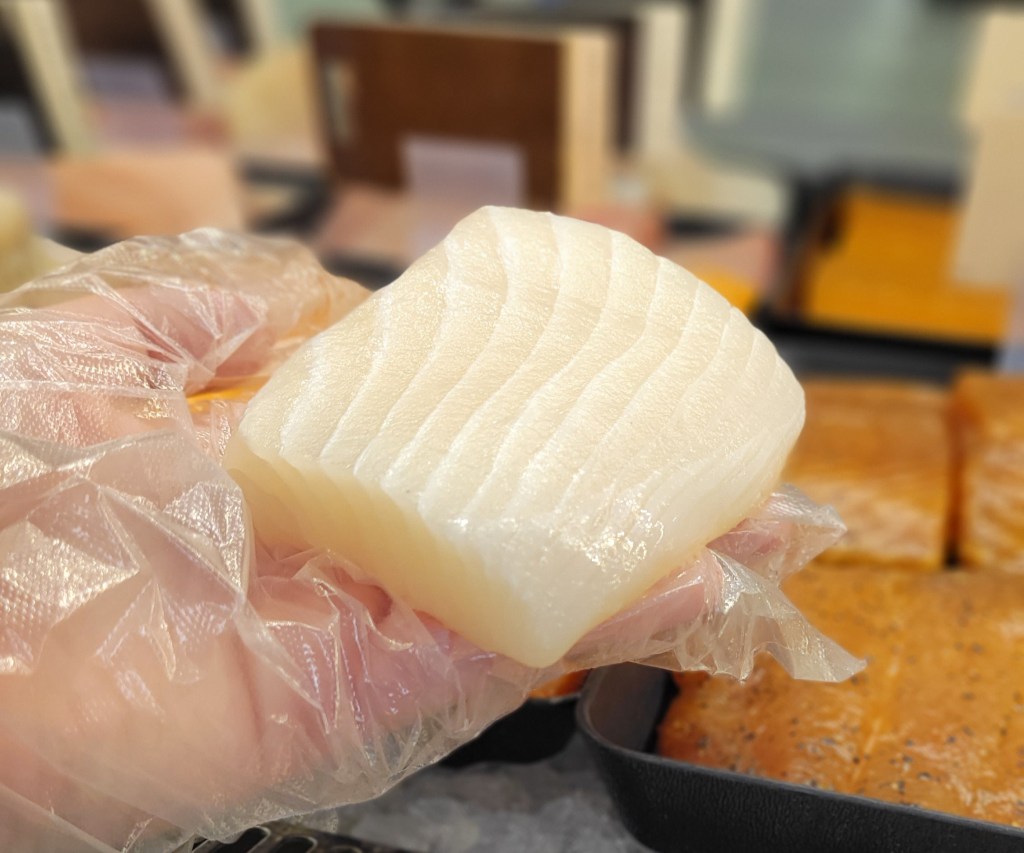
However, despite all of this, halibut is amazing! It’s sweet with a firm texture that doesn’t fall apart, very mild and not “fishy”, yet flavorful without needing to go over the top with seasonings or sauces. In fact, I thoroughly enjoyed my halibut with simply salt and pepper. As someone with a sweet tooth, I did add a pineapple honey and raspberry gastrique (see recipe here, it was absolutely delicious). I did make the mistake of pairing it with pineapple-flavored couscous as the whole dish was a tad too sweet – even for me – so I’d recommend pairing the gastrique with a savory couscous (or other side of your choosing) or the pineapple couscous with a savory seasoned halibut. But… you do you, boo boo.
“Alright, Courtney. Halibut looks amazing! I can’t wait to try it. Except… it’s so expensive. Why?!”
Yeah… sorry, guppies. There is a perfect explanation for this.
Granted, it all depends on which area of the country you live. Obviously, if you live closer to the source (west coast United States, for example), you’ll find halibut at a better price because there are less shipping fees added into the cost. The farther away you are from the source and the farther they have to ship the item (such as Florida), the more expensive it’s going to cost because they had to make up for the cost of shipping. Basic economics. However, there is more to it than just shipping.
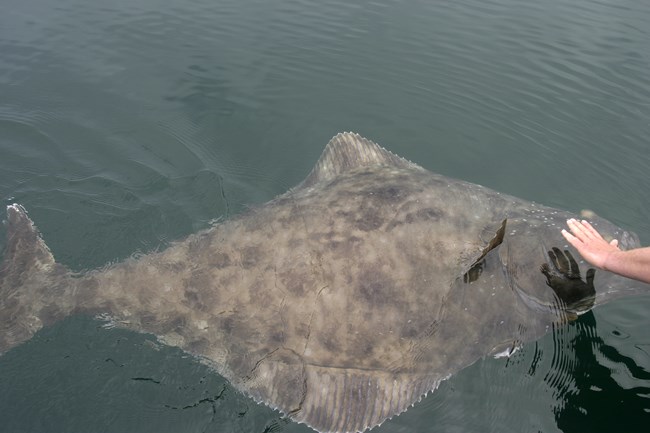
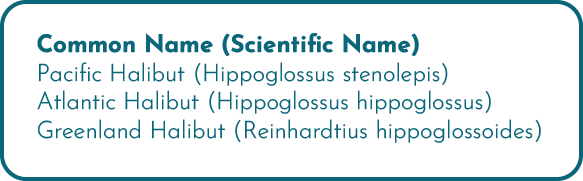
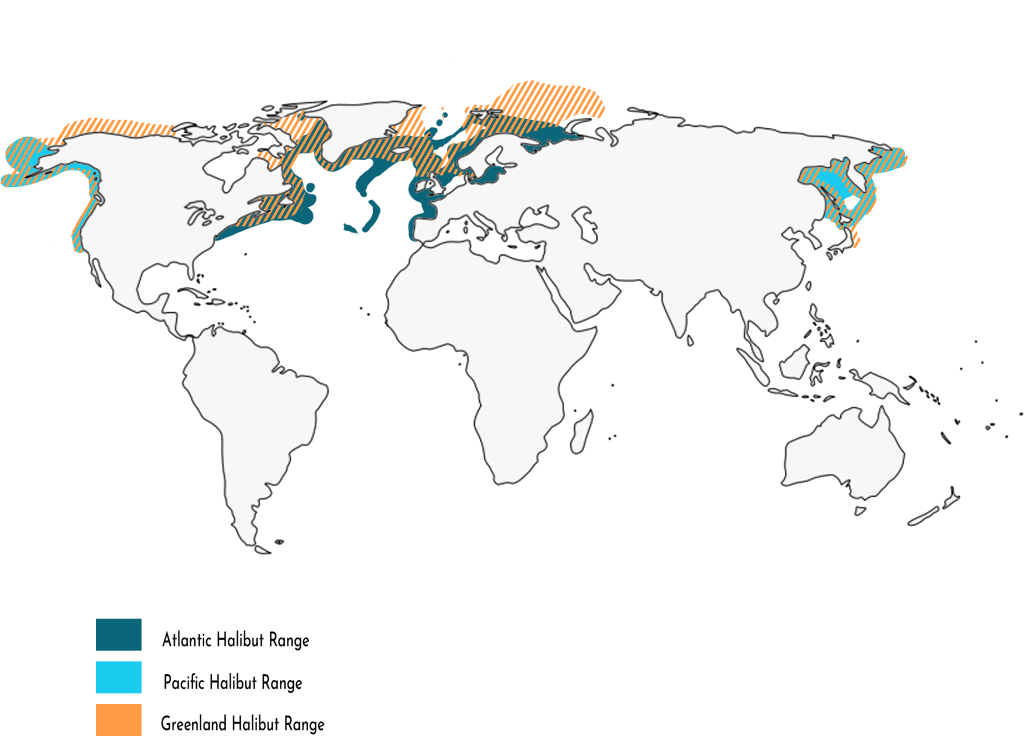
Halibut, the world’s largest flatfish, is a great quality fish. The demand, as one could imagine, is high. In fact, this is the reason why halibut numbers in the Atlantic Ocean are alarmingly low. So, to back track a little bit, halibut can be found in both the northern Atlantic (Hippoglossus hippoglossus) and Pacific (Hippoglossus stenolepis) and are technically two separate species. The Atlantic halibut is said to taste better because it’s less “watery” (probably something to do with the Atlantic Ocean being more salty than the Pacific. Salt draws water out, which is why you get thirsty after salty snacks. It’s called osmosis. Same thing happens in fish. Salt draws some of the water out of the fish, thus enhancing the flavor). Since the Atlantic halibut was more popular than the Pacific, this caused the Atlantic halibut population to be severely overfished. This is why you will mainly see Pacific halibut at grocery stores, even on the east coast U.S. The Pacific halibut fishery is well managed and the stocks are plenty.
In order to insure future populations of halibut, it’s important to refrain from eating the Atlantic species for the time being, until the population has stabilized. Through responsible and sustainable fishing efforts, the goal is to make all fish populations once again stable to ensure we can all enjoy these species in the future, including Atlantic halibut. I tried a halibut fillet from the Pacific, and if that tasted amazing, then I can’t even imagine what a fillet from the Atlantic tastes like… #QueTheDrool. By refraining now, we will all have the opportunity to enjoy Atlantic halibut in the future.
#FunFact: there is a third species of halibut: the Greenland halibut (Reinhardtius hippoglossoides), which roams the Arctic Ocean down into both the Pacific and Atlantic side. It was also a victim of overfishing in the 1970’s, but the population as seen a bounce back to near-threatened levels, which is pretty good. In 2017, the Marine Stewardship Council certified the Greenland halibut to be sustainable. Even though fished primarily in and around Greenland, the fish is considered a delicacy in East Asia, even though the meat is not as satisfying as the Atlantic species.
Aside from popularity, demand/price is also influenced by the IFQ system. This allows fishermen to time their harvest with market demand to sell their catch at the highest price possible. Through in the fact the halibut fishing season ranges from March 15th to October 15th every year and you have the perfect concoction for expensive fish.

Halibut in a Clamshell
Wild Fishing Sources (*Main)
- United States of America
- Alaska*
- Oregon
- Washington
- Canada*
- Faroe Islands
- Germany
- Greenland*
- Iceland*
- Norway*
- Portugal
- Russia*
- Scotland (UK)
- Spain
Farming Sources:
- Canada
- Chile
- Iceland
- Norway
- United Kingdom

PiscesCulture Recipes

Pan-Seared Halibut with Raspberry Gastrique
Sources:
- International Pacific Halibut Commission, for Pacific halibut fishing practices and regulations https://iphc.int/
- Massachusetts government website, for more information about Atlantic halibut, including recreational fishing regulations https://www.mass.gov/service-details/learn-about-atlantic-halibut
- NOAA Fisheries, on Halibut facts and statistics https://www.fisheries.noaa.gov/species/pacific-halibut#overview
 Pisces Culture