
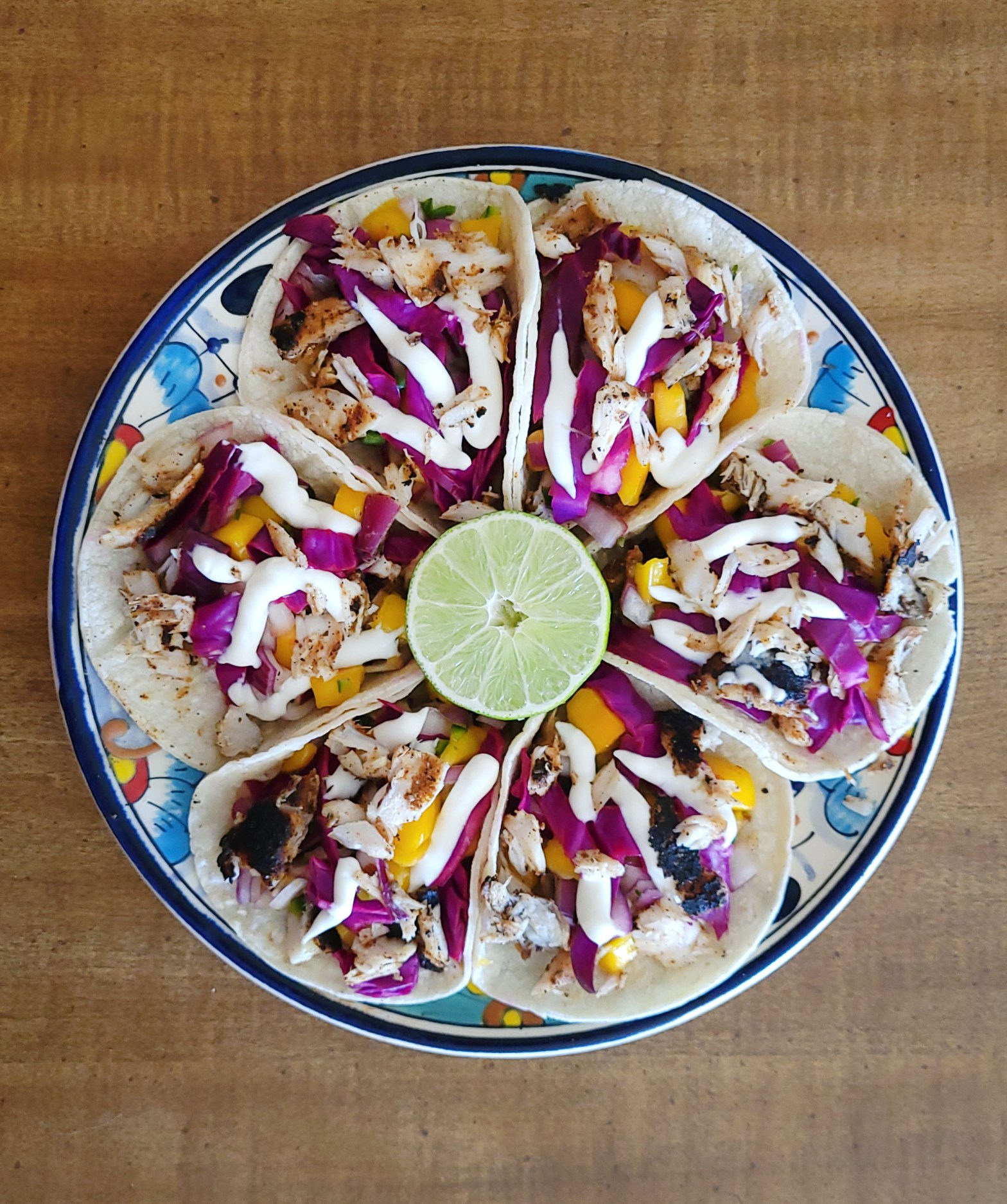
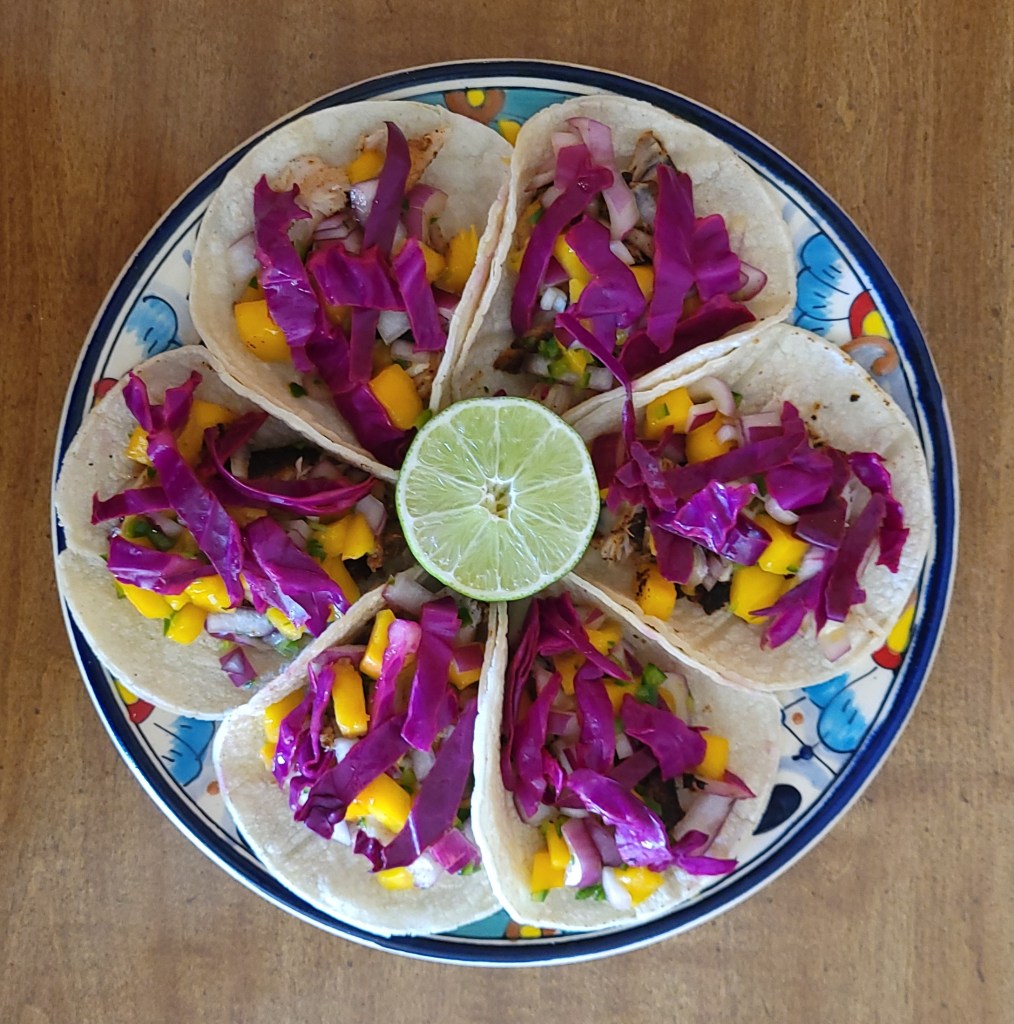
With mango salsa, red cabbage, and crema on corn tortillas.
Created by Courtney Hanlon
I love me some island inspired food. If blackened is a choice on the menu, you can bet I’ll be picking it. “Blackened” is of Cajun origin and is defined as heavily seasoned food that, when cooked, develops a literal blackened crust. It can be used on practically any meat: chicken, pork, beef, fish, and more. People who like that crunchy char flavor from the grill will probably also like blackened food.
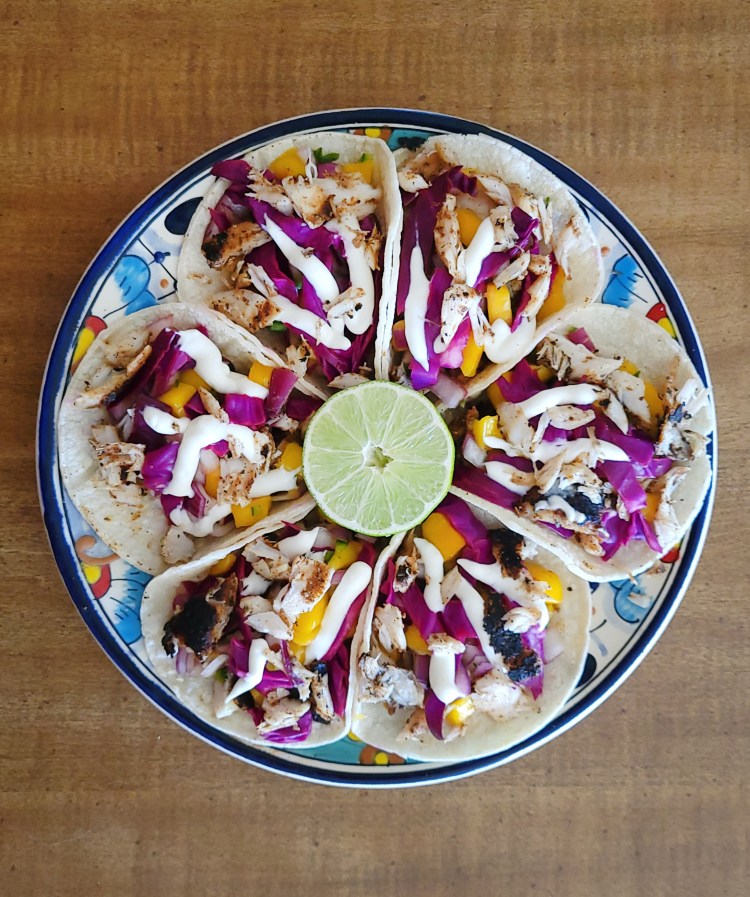
Let’s talk about “what is a real taco” for a quick moment. Us Americans are used to the classic Taco Bell taco: flour tortilla with ground beef (or whatever filling you usually get) with lettuce, shredded cheese, maybe some tomato and/or onions. But real tacos from those real Mexican restaurants (or if you’re lucky enough to have friends from Mexican families who have been using these recipes for generations), it’s a corn tortilla topped with your seasoned meat, onions, and cilantro. It’s the best.
Now, of course everyone is at the liberty to be creative. Even other countries around the Caribbean and South America (and honestly around the world) have their own variations on tacos. These tacos in this post are definitely more Caribbean inspired with the blackening seasoning (which is actually more Cajun) and then mango and jalapeños. But I wouldn’t call these “Mexican” or use any other specific country of origin, just as we wouldn’t call our flour-lettuce-cheese combo “Mexican” either.
Cooking Tips
While cooking, keep these handy tips in mind:
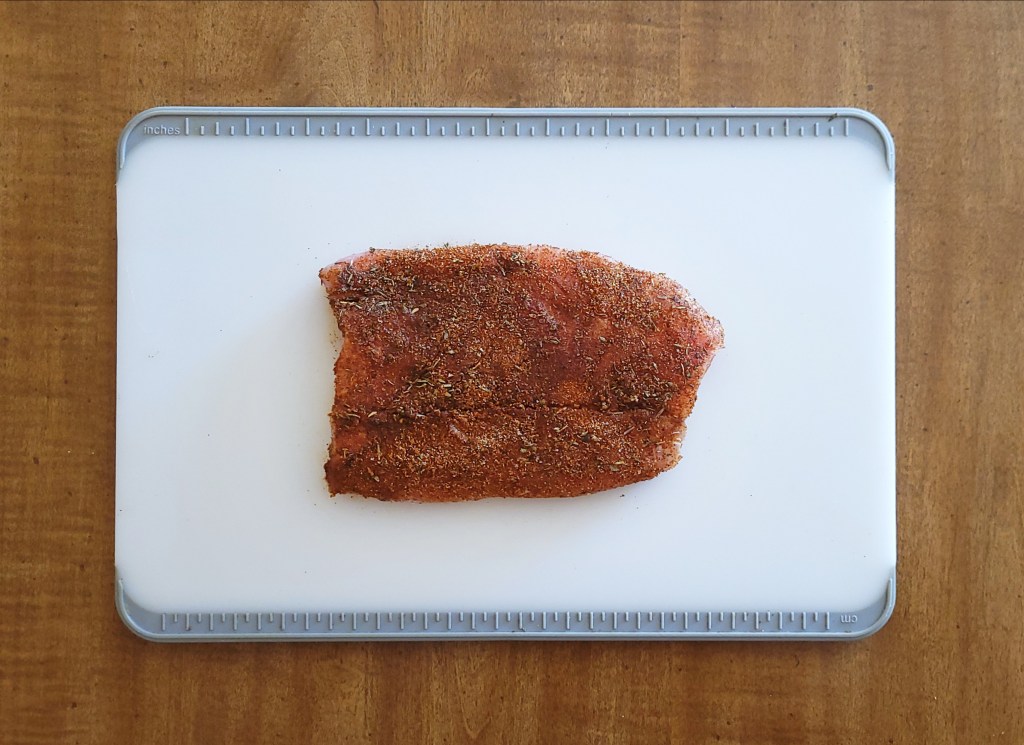
- You can choose whatever blackening seasoning you want for this recipe. I used the one from this website, but you can make your own or find one at the grocery store. And it’s not a certain set of spices that make it “blackening” seasoning. You can use whichever ones you want! I do recommend looking at an already existing recipe for reference to get a good ratio, if it’s your first time mixing a blend. For example, I had cayenne in my mix, but if you aren’t a fan of spicy heat, then don’t add cayenne.
- The “blackening” method is literally the burning of spices. Yes, you are technically burning your food (therefore, if you dislike the bitterness of burnt food such as . However, you’re only burning the surface of the spices, not the actual flesh of the fish, so this is why people enjoy this method. You will see a little smoke coming from the fish/pan. Don’t panic, this is normal. If smoke is filling the room, then it’s a problem.
- Make sure your kitchen, if cooking indoors, is ventilated well. Turn on the exhaust fan or open nearby windows while cooking the fish. It will help prevent smoke from filling the room.
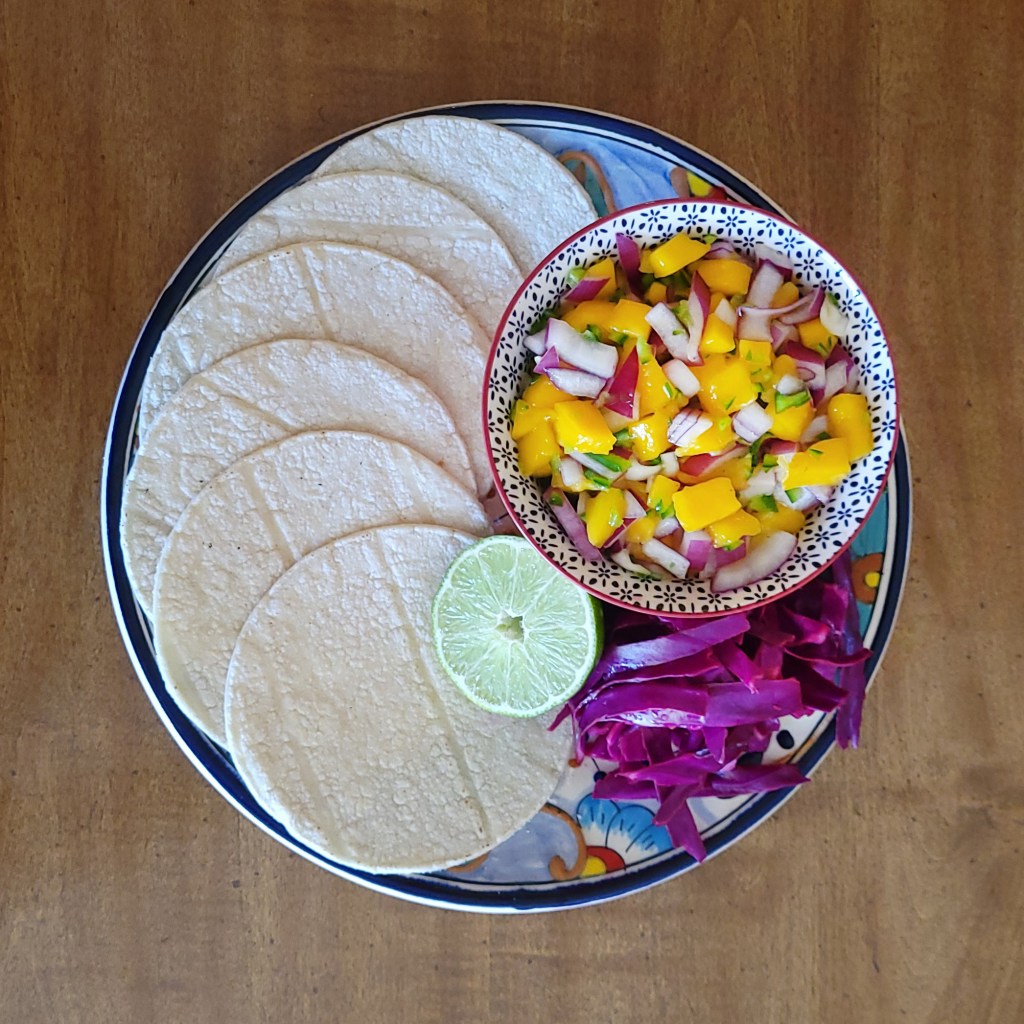
- Slice your cabbage as thinly as possible to add the perfect crunchy texture to your tacos. I inherited a special salad knife, which is a plastic serrated knife that prevents leafy greens from turn brown when cut, which can happen when cut with a metal knife. However, it’s not the end of the world if you don’t have one. A metal knife will get the job done.
- Corn tortillas over flour tortillas any dayyyy. While flour tortillas are still technically Mexican (albeit with outside influence), I believe they are good when needing to be rolled or tightly folded, like for burritos and crunch wraps, since they are more flexible. But for tacos? Corn is the best for that authentic, cultural flavor.
- You can still enjoy these tacos without spicy heat by not adding cayenne to your spice mix or jalapeños (which are in the mango salsa). Or, if you do add jalapeños, don’t add any seeds or core. This is where the heat comes from. I actually did this for my tacos so I could enjoy the jalapeño flavor without it being too hot for me to handle. If you want to nix the jalapeños all together, you can use a green bell pepper instead.
- The benefit to the crema is it will provide cooling relief to the spicy flavors without being as heavy sour cream. If you love the fresh fruit and veggie taste and don’t care about the spice, skip the crema.
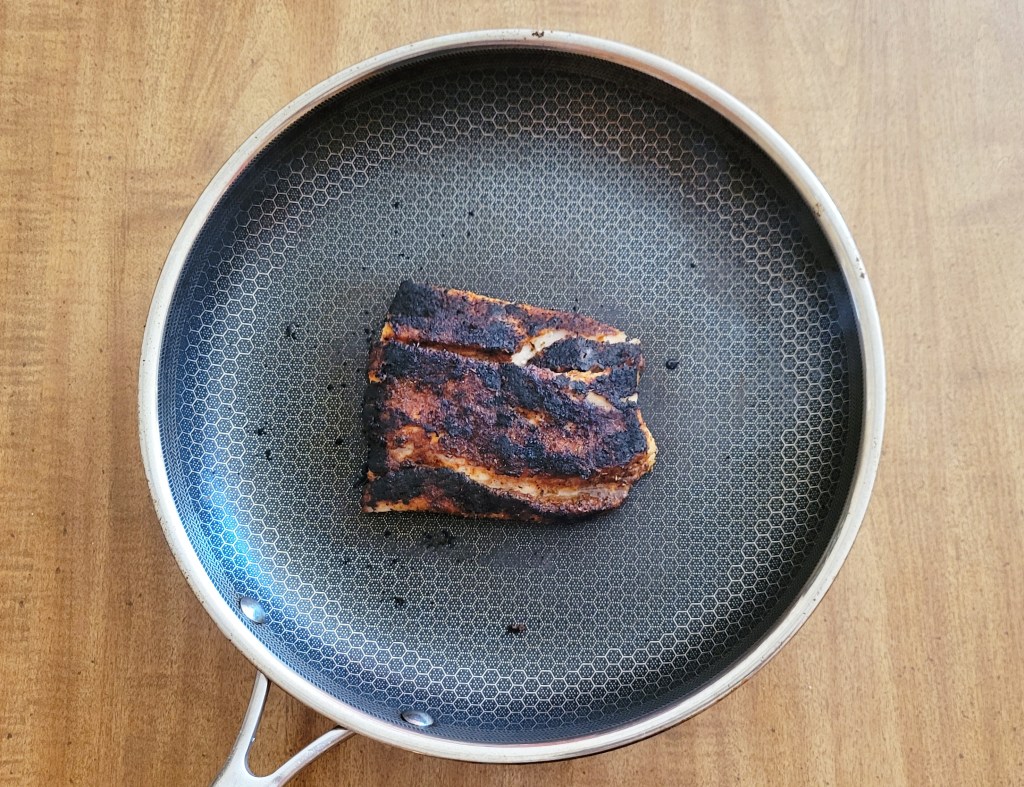
- Butter is preferred to get the most flavor. However, you can substitute a low-smoke point oil, such as canola oil. The last thing you want is for your fish to actually catch on fire. Make sure you know your oils! Also, unsalted butter is preferred among cooks because it is easier to control the salt content, but it’s okay if you only have salted butter on hand.
- Choice of pan is important. Traditionally, blackened food is cooked on an iron skillet and is preferred. I used a fancy, specialized HexClad plan (unsponsored) and got the same result. You can use a normal non-stick pan, just be careful.
- This is also the best time to whip out your fish spatula! If you don’t have one, use the longest spatula you have or else your fish will fall apart when you flip it. This is because you’d want it to cook evenly and make sure all the spices are effectively blackened. If anything, it’d be better for your fish to fall apart after you cook it, since it’s going be flaked for the taco anyway.

Let’s Start!
Skill level: Novice
Prep time: 20 minutes
Cooking time: 10 minutes
Total time 30 minutes
Substitutions: Grouper, snapper, mahi, or redfish
Ingredients
- 1 head of red cabbage
- 1 mango
- 1 red onion (half will be needed)
- 1 jalapeño
- 2 limes
- Salt, to taste
- 3/4 lb. of corvina fillet(s)
- 3 tbsp butter (unsalted preferred)
- Blackening seasoning (store bought or make your own here)
- 6 street taco-sized corn tortillas or 4 regular size corn tortillas
- Crema, to taste
Instructions
- Take corvina out of the fridge and let it come to room temperature. Set aside.
- Thinly slice the head of red cabbage until you have a small bowl full. Set aside.
- Prepare the mango salsa: cut the flesh off around the mango‘s core and peel the skin off. Slice into small cubes and put into medium bowl. Cut the red onion in half and peel the skin off. Chop one half and add cubes to the mango bowl. Chop jalapeño as desired (see cooking tip above), careful to avoid touching the seeds with your fingers, and add to mango and onion bowl. Mix together. Quarter one of the limes and squeeze the juice into the salsa bowl. Season with salt as needed. Set aside.
- Prepare the fish: corvina dry with paper towels. in a microwave safe bowl, melt the butter in the microwave in 15-30 second intervals. Dip your corvina fillet(s) in the butter to coat. Coat the fillet in spices on both sides. Don’t be afraid to coat heavily for the true blackened flavor.
- Heat skillet on medium-high heat (do not add oil or butter). Place corvina on skillet for 3-4 minutes, flip, then for another 3-4 minutes until the internal temperature reaches 145°F (63°C). Set on plate or cutting board to cool for a moment.
- Assemble tacos: put tortillas on a microwave safe dish covered with a damp paper towel in the microwave for 30 seconds. Cut or shred the corvina into chunks. Top tortilla with corvina chunks, mango salsa, few shreds of red cabbage, and crema. Cut other lime into quarters and squeeze juice over tacos, as desired. Serve!
You may also enjoy:
- Seared Halibut with Honey Raspberry Gastrique
- Cod vs. Haddock: is there a Difference?
- Blackened Corvina Tacos
- Corvina 101: A South American Trademark
- Halibut 101: What’s the Deal?
We made this last night using grouper since the market did not have Cortina. It was fantastic and we will…

 Pisces Culture
We made this last night using grouper since the market did not have Cortina. It was fantastic and we will certainly make it regularly! Great recipe.
LikeLiked by 1 person