
By Courtney Hanlon
June 23, 2022

Ah, the question I get on the weekly basis.
IS there a difference between cod and haddock?
The short answer: yes. And many people can attest to this.
There are three kinds of fish eaters in this word. There are those who stick solely stick to cod and nothing else… those haddock-lovers who will turn their nose up at cod… and those who simply don’t have a preference between the two because one is just as good as the other. Me? I guess it depends how I’m preparing my fish (we’ll get to this topic further below).
Cod and haddock are both culinarily identified as flaky white round fish. They have a torpedo body shape yielding two fillets. When cooked, their flesh is pure white and flakes easily with a fork. As they are both lumped into the same fish category, they can be used interchangeably among most recipes. While they have similar characteristics, they do have subtle enough differences to make or break your dish. Let’s break it down…

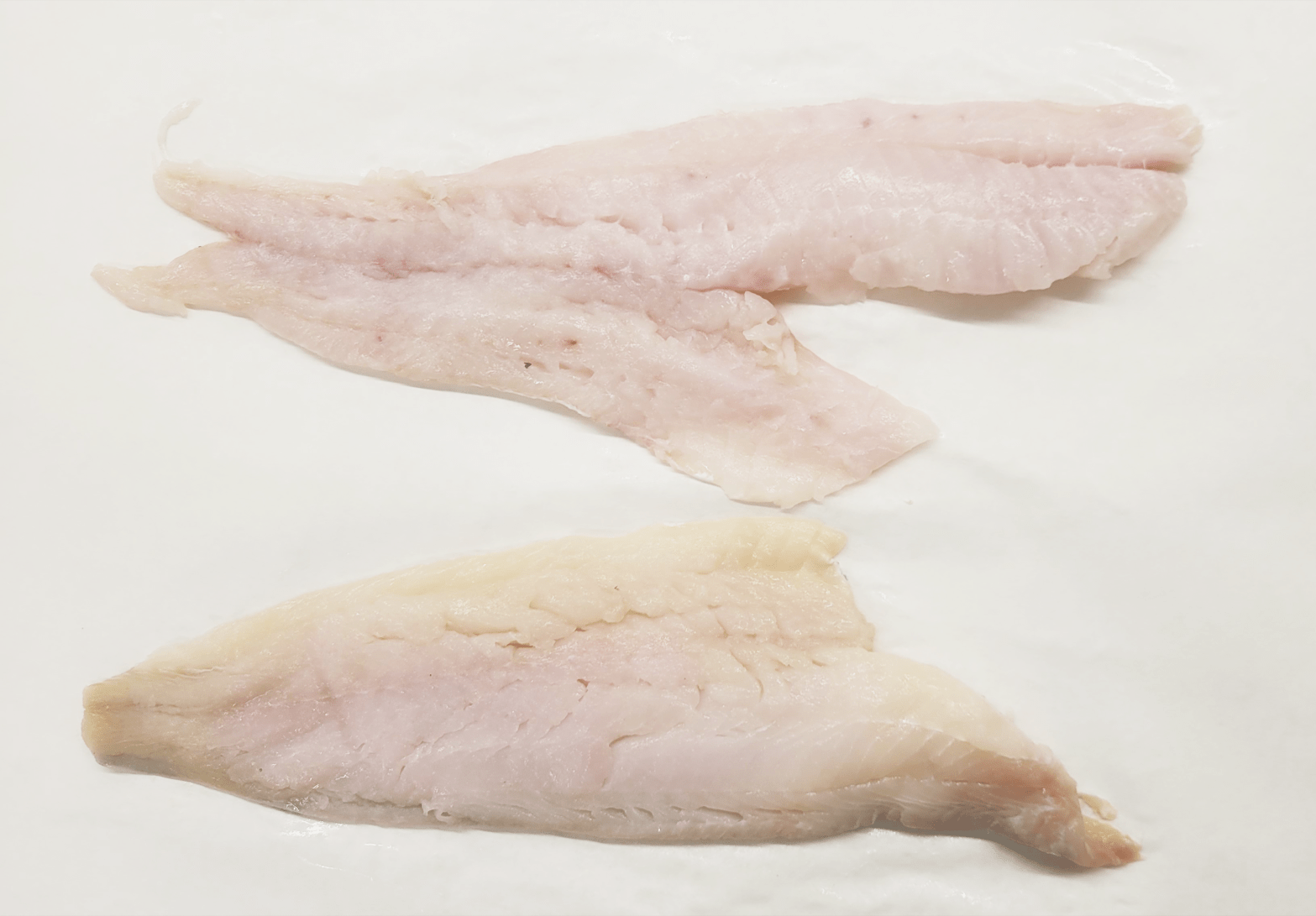
SIMILARITIES: the reason why these two fish are so similar is because scientifically… they are. Haddock are members of the cod family (Gadidae), making them something like cousins on the fish family tree. There are a couple fish species who don’t have “cod” in their name but also belong to this family. Haddock is one of them. Cod and haddock occupy the same habitat in the Atlantic Ocean and are fished along both the North American and European coasts. Both are mild and sweet in flavor with a tender flake fish eaters love. Because of these qualities, their flesh are almost identical. I actually have to sell the haddock with the skin on so it doesn’t get confused with cod. As for cooking methods, both fish can be baked, broiled, fried, and sautéed.
#DidYouKnow: along with haddock, whiting and pollock are a part of the Gadidae family and are considered to be “cods”
Now, the DIFFERENCES…
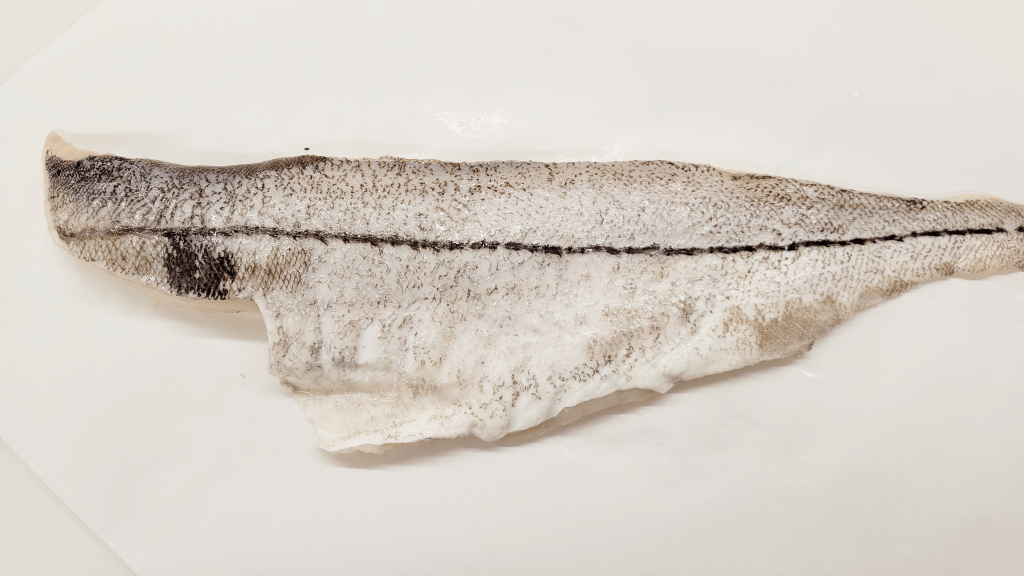
Physical: In the wild, you can identify a haddock by the single, black lateral pin stripe trailing from the head down to the tail. Cod doesn’t have a feature like this. There is also only ONE species of haddock, but quite a few species of cod (mainly, Atlantic and Pacific, which are the species we will be referring to for the remainder of the article).

Habitat: Haddock only exist in the northern Atlantic. Cod species occur in both the northern Atlantic and Pacific.
Flavor: while both are considered “mild”, haddock is the most mild. Atlantic cod is the next mild and the Pacific cod is more moderate (these differences in cod are explained in the Cod 101 post). Cod is said to have a more “clean flavor” (without off flavors or undesirable traits) and it will have a larger flake than the haddock.
Texture: haddock and Atlantic cod have the same firmness (considered to be “moderate”) and Pacific cod will be the most delicate.
Unique cooking methods: only haddock can be poached and smoked. Only cod can be steamed. Do not substitute these fish with each other for these specified methods as the result will not turn out the same.
Parasites: wild haddock tends to be more resistant to parasites, where as they are more common in cod. This isn’t to say it couldn’t happen in haddock (as I find one approximately once a YEAR since I’ve been working behind the counter), but it’s much less common than in cod.
Last but certainly not least… wine pairing: while this is a generally accepted preference as opposed to a rule among the community, haddock is best paired with a Riesling wine while cod is best paired with a Pouilly-Fume, though either can work with any sweet flavored white wine.
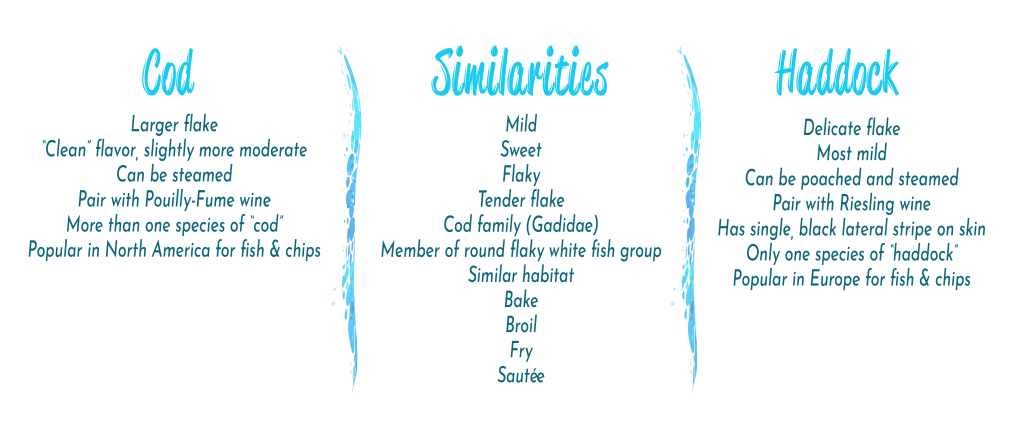
Comparing Cod and Haddock
in a Clam-shell…
Species Distribution Map

You may also enjoy reading:
- Seared Halibut with Honey Raspberry Gastrique
- Cod vs. Haddock: is there a Difference?
- Blackened Corvina Tacos
- Corvina 101: A South American Trademark
- Halibut 101: What’s the Deal?
If you want to see more content from PiscesCulture, subscribe below!
 Pisces Culture